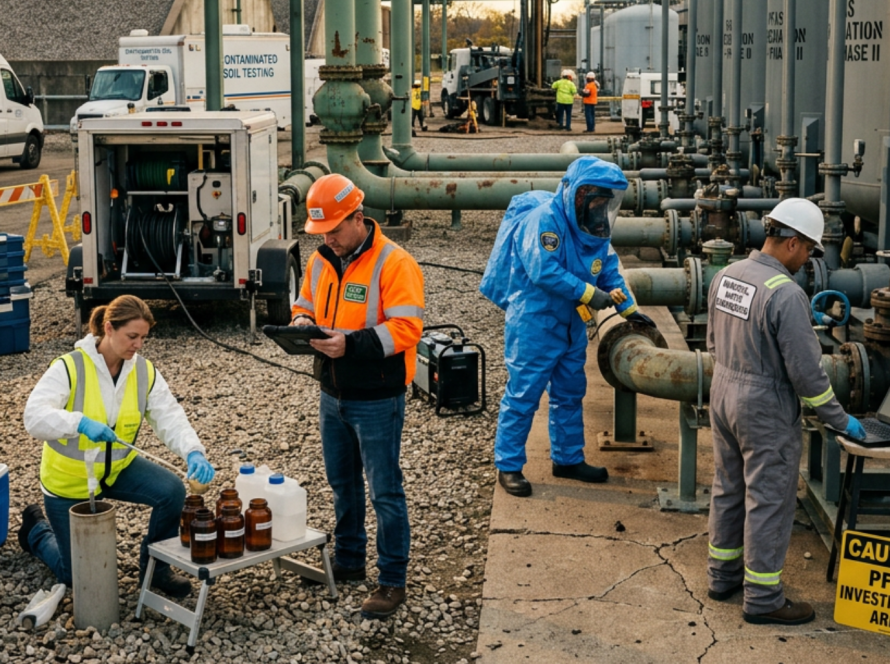
In January 2026, the European Commission released a report that fundamentally reframes the global conversation on environmental risk. By estimating that remediation of PFAS-commonly known as “forever chemicals”-could cost up to €1.5 trillion, Europe has transformed PFAS pollution from a regulatory issue into a systemic economic threat.
For C-level leaders across manufacturing, chemicals, infrastructure, energy, and finance, this is not merely an environmental data point. It is a strategic signal with far-reaching implications for capital allocation, supply chain design, and long-term competitiveness.
From Environmental Externality to Macroeconomic Risk
PFAS have long been known for their persistence and bio accumulative properties. What changes with this report is scale. When the cost of inaction reaches trillion-euro territory, PFAS exposure becomes a balance-sheet concern for societies, comparable to climate risk or energy security.
The European Commission’s analysis demonstrates that legacy PFAS contamination carries long-term health costs, water treatment expenses, soil remediation liabilities, and ecosystem degradation that compound over decades. These costs are not theoretical-they are increasingly measurable, insurable, and litigable.
Global implication: PFAS risk is moving into the same strategic category as carbon exposure, forcing governments, insurers, and investors to reassess long-duration liabilities.
Source Elimination Emerges as the Only Economically Rational Path
One of the report’s most consequential conclusions is that eliminating PFAS at the source by 2040 could save €110 billion compared to a business-as-usual approach. This finding reshapes policy logic.
Instead of relying on downstream remediation-often costly, slow, and incomplete-the economic case now Favors prevention, substitution, and redesign.
Global implication:
- Product reformulation and PFAS-free materials accelerate
- Regulatory focus shifts upstream, targeting production and design
- Industries that delay transition face rising compliance and remediation costs
For executives, this signals a structural shift: PFAS-free innovation is no longer optional-it is economically inevitable.
A Catalyst for Global Regulatory Convergence
Europe’s cost assessment lands amid tightening PFAS controls worldwide. China has expanded its list of priority-controlled PFAS. Canada has strengthened prohibitions on specific uses. U.S. states and federal agencies are escalating restrictions and disclosure requirements.
What emerges is a pattern of regulatory alignment, even if implementation timelines differ.
Global implication:
- Multinationals can no longer manage PFAS exposure market by market
- Supply chains must be designed for the strictest regulatory environment
- Compliance becomes a prerequisite for global market access
This convergence reduces uncertainty-but raises the stakes for delayed action.
Clean Technology Moves from “Nice to Have” to Strategic Necessity
The scale of projected remediation costs fundamentally alters the economics of pollution control. Technologies capable of destroying PFAS, rather than merely containing them, gain immediate strategic relevance.
Advanced solutions-from electron beam treatment to novel chemical destruction methods-shift from experimental tools to critical infrastructure candidates.
Global implication:
- Increased public and private capital flows into PFAS-destruction technologies
- Water and soil remediation markets expand rapidly
- Innovation timelines compress under regulatory and economic pressure
Environmental remediation becomes a growth sector, not a cost centre.
Read on: Electron beam technology as a breakthrough for permanently destroying PFAS “forever chemicals” and advancing global pollution cleanup efforts.
What This Means for Global Leadership
The European Commission’s €1.5 trillion estimate delivers a clear message to global decision-makers:
Persistent pollution will ultimately be priced-and the cost of delay will exceed the cost of transformation.
For C-suite leaders, the strategic question is no longer whether PFAS regulation will intensify, but how quickly organizations can pivot-turning compliance into competitive advantage, and risk mitigation into long-term resilience.
This moment marks PFAS’ transition from an invisible contaminant to a defining challenge of the clean industrial era-one that will shape regulation, innovation, and capital deployment for decades to come.